
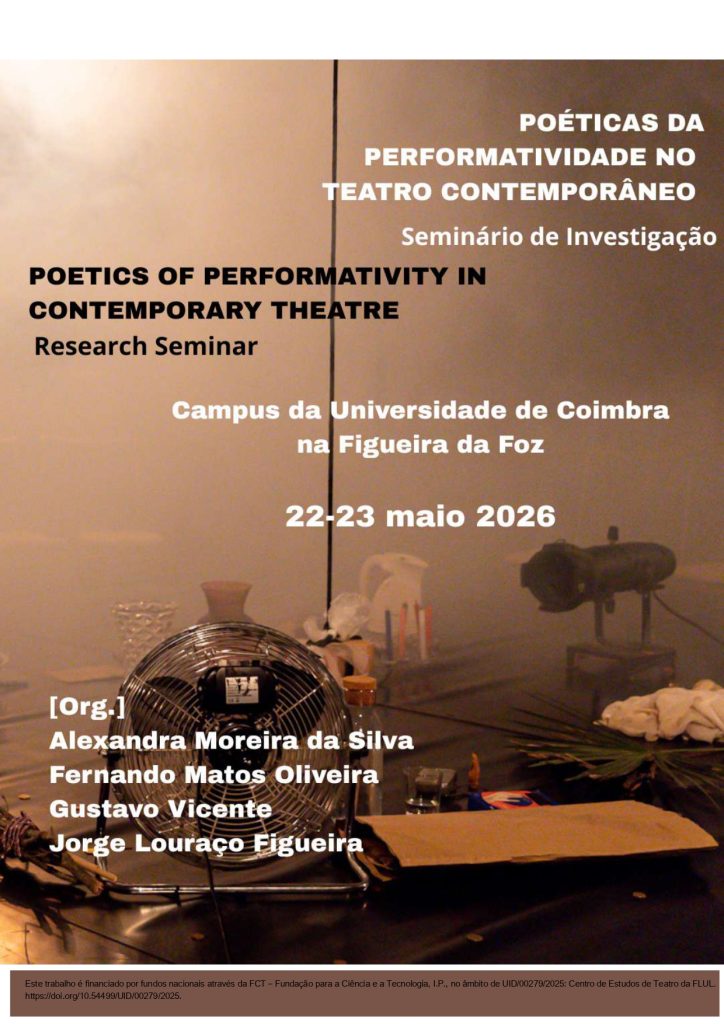
The seminar proposes, in this second edition, to explore the multiple configurations of performativity in contemporary theatre. Today, we can observe more clearly that H.T. Lehmann’s designation of a postdramatic theatre marked a shift from a paradigm of representation to a paradigm of presence and expanded contingency. In this sense, his conceptual framing of these changes already appears, in a premonitory way, as a kind of exhumation. Let us recall the phrase: “Postdramatic theatre can be described as follows: the members or branches of the dramatic organism, although this is material in extinction, remain present and form the space of a ‘bursting’ memory” (2027:31). The poetics of performativity that we aim to interrogate occur both within and beyond this framing, because between the 1970s–1990s and the first two decades of the third millennium, conceptual, disciplinary, and material equations emerge, as well as new forms of institutionalization and new ontologies that increasingly traverse performative practices, placing performance and the body under new perspectives.
If the valorization of performativity is situated within the critical positions of Erika Fischer-Lichte or Josette Féral, this seminar seeks to trace and reflect on the various regimes of presence that converge in a corporeality doubly shaped by both the impetus of contemporary regimes of production (B. Kunst) and the broader networks that co-determine the very agency of the human body (K. Barad; R. Braidotti). The study of the “poetics” of performativity ultimately suggests, from its plural formulation, a careful listening to the dimensions of artistic making, attentive therefore to the arts that have historically intersected with the dramatic organism, even when this “memory that bursts forth” manifests itself in performative revisitations of its modes of making and producing meaning.
Date: 22–23 May 2026
Venue: University of Coimbra Campus in Figueira da Foz
Organizers: Alexandra Moreira da Silva, Fernando Matos Oliveira, Gustavo Vicente, Jorge Louraço Figueira.



